
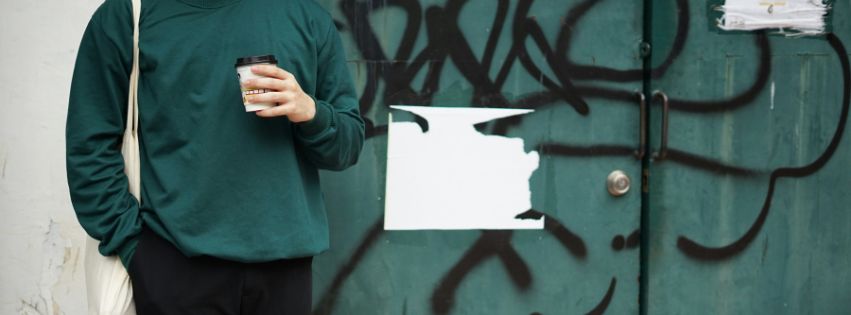
If you happen to have been online in any capacity over the past few months, then you will have faced performative men.
performative male
A performative male is one who reads books by women authors, drinks matcha, and carries a tote bag (bonus points if it’s artsy) with a labubu pinned to it. Also, wear baggy pants. He likely listens to indie artists like Clairo. The books he reads may include, but are not limited to: The Bell Jar, Intermezzo, and We Should All Be Feminists. His home or room likely has vinyl collections hung on the walls.
A subgenre of “nice guys” that tries too hard to be in touch with their feminine side or pretends to like things like K-Pop, tote bags, reading, matcha, Laufey, or the like to improve their popularity with girls.
While trends seem to move quicker these days, the performative male trope has survived a few cycle turns and is still in the headlines today.
This is a testament to the particular chord it’s striking with people, and that’s what I wanted to talk about today.
Performance & Social Media
It makes sense for this trend/meme to take off on social media – and not only because this is where all trends start today.
The central purpose of the performative male is his performance, right? And what else are we doing on social media if not performing?
Whether you have thousands of followers or a private account, we’re all playing a role whenever we post.
To a certain extent, socialising in general, such as what you say, what you wear, and who you hang out with, is performative too ;social media has just allowed us to curate it a bit more. We have control over how we are perceived on social media, which is why I think trends become so specific and niche. We all want to be perceived well and in a way we think aligns with us, so of course we will try anything to achieve that.
While it may be subconscious, the way you are perceived plays a major role in every decision you make. It’s human nature.
We’re social creatures and in our shared past social acceptance meant survival. And perhaps not just in our past, as those who have been socially ostracised or dealt with loneliness would argue. You could say that acceptance is still a matter of life or death in many cases.
So we do what we can to appeal to the people around us, or to appeal to the kind of people we want to have around us.
While this is not new by any means, social media has magnified this need to be liked and accepted.
This is why the performative male is doing so well on the scrolling apps. And while part of me is enjoying the fact there is a shared interest once again (nothing brings people together like ridicule), it all feels – dare I say – performative.
It’s A Cycle, A Mean Circle
One of the funniest things about getting older is seeing trends come back around.
I’d heard about this phenomenon from my parents growing up, when they’d claim that they’d heard a certain song before or that my outfit reminded them of something they wore ‘back in the day’, but witnessing it first hand is a whole new experience.
It’s simultaneously fun and devastating, and it’s happening all the time now.
The performative male trend reeks of old news. While the clothes, music, and drinks have changed, I was here for the first cycle; but, back in my day, we called them Hipsters.
With their black framed glasses, plaid shirts, and expensive coffee shops, the Hipsters of the 2010s could be of any gender, but it was men who got the headlines. Like today’s performative male trend, there were memes, costumes, and pseudo-intellectual articles (just like this blog post!) discussing the Hipster trend and what it means for men, specifically.
It was not just a trend, but a cultural moment.
The performative male trope feels exactly the same. Not only because it is basically the same thing (straight men enjoying stereotypically feminine things) but also because of what it says about us right now – just like what hipsters said of a post-recession world.
The Performative Male & Society
It does not feel like a coincidence that the performative male trend is kicking off right now, when we (primarily the US and the UK) are witnessing a push toward conservatism.
The separation of genders, and even the attempted eradication of some, is the foundation of conservative values, and a huge issue right now, so of course the performative male is big news.
The performative male has come has come around at a very interesting time. As we are seeing this push towards conversative values, gender essentialism, and general bigotry, we are seeing men being ridiculed for their ‘feminine’ hobbies and women being cohered back into their bathrooms to achieve a new, higher standard of beauty.
The performative male rising at the same time as the extreme beauty trends for women is no mistake. It feels very calculated.
Women are being urged to perform these intricate, expensive and time-consuming routines such as overnight shedding and preventative Botox to achieve today’s ‘clean girl aesthetic’
This aesthetic, which focuses on primarily white, skinny, rich girls is big news for women and femme presenting people. The pendulum for beauty standards has swung drastically into the opposite direction, requiring a lot of time, money and energy that people simply cannot afford right now. While beauty standards are always constraining, the current trends have a particularly scary undertone, which I think correlates perfectly with the performative male.
The fact that these two trends are existing at the same time, during this particular time in history, is not a coincidence – it is a deliberate push to keep us separate. Yes, it is that deep.
Women are being given more insecurities and labour whereas men are being ridiculed for having varied interests, forcing both sides back into their rigid gender roles, where we are easier to control and manage.
It should be said, that the performative male trend did not start out this way. What was originally a genuine way for people to discuss harmful behaviours and stay safe has been transformed into an international joke – and a tool for separation. Very much like the beginnings of incels.
The performative male ridicule, combined with the rigid beauty demands for women, are way to divide people and build mistrust between us all. Because together, we can be powerful and that needs to be avoided at all costs.
Sex And The Performative Male
The trend is not only an example of the changes in values (i.e., this push for conservatism, which always comes during times of unrest) but also represents what is going on with us, the people, right now.
You don’t need me to tell you how lonely it can be out here, these days.
We hear all the time about the male loneliness epidemic, see horror stories of poor socialisation, and get frequent reports of dwindling sex rates (according to this study, we are actually in a Sex Recession). While there are a lot of factors that play into all these issues, the performative male is the perfect demonstration of where we are in terms of social connection and, yes, sex.
The performative male is performative because he wants attention from women, right?
While changing your look or expressing an interest in a specific thing to get attention is not new, the timing is the most significant thing here.
For me, the performative male (like the pick me girls of the past) is a testament to how lonely people are.
According to the trend, men are willing to change everything about themselves just to be seen – or to get laid. While this highlights issues in terms of self-esteem, education, and socialisation, it just super sad, to be honest.
It shows that some people are so desperate for some connection with other human beings that they will become someone new in attempts to achieve it.
Even the ‘backlash’ to the performative male, usually from other men, is performative in itself.
It’s become a way to demonstrate how you are a good choice of partner because you either a) really do like feminist literature or that particular artist or b) don’t pretend to be something you’re not.
(Of course, not everything is done in order to get a partner, but that’s the angle I’m taking here because it feels relevant)
We’re performing because we feel like it’s the only way we can make connections. We need to stand out, to be different, and to become something we’re not in order to get the love we’re so desperate for. That is who the performative male has become, and if that does not represent a sorry state of affairs, then I don’t know what does.
What Does This All Mean?
To summarise, I think the performative male is the personification of our shifting value system (whether we agree with it or not) and our ongoing loneliness.
We just want to be loved and we want to be right. These are normal human desires that are seemingly harder to achieve these days. From constant hot takes on social media to scary political changes and a general sense of fear and loss, people don’t know where to turn.
These trends act like they give us the answers, and are a way for us to make the connections we’re so desperate for, but in the end they’re making us go further away from each other.
While the solution may be ‘get off social media, develop your own personality and fuck other people’s opinions’ it’s not that easy – that’s why we keep seeing the same thing happening on repeat.
10 years ago, it was the Hipster, today it is the performative male, and next who knows. But it’s not going to be good if we continue to get caught up in it.
The performative male started out as a fun trend, a way for women to poke fun at the sad dating standards and help keep each other safe, but it has become so much more. It will become a reflection of our current values and the state of the world we’re living in; one where people are lonely and desperate, but cannot find a way to break free.
Do you think I’m taking this too far? What do you think the trend represents? I’d love to hear your opinions.
Speak soon,
Rachael.

 rachaelic
Leave a comment